How I Got Published
A question I get asked a lot is how to go about getting published. It’s a hard one to answer – there is no formal route into getting a book published and most authors’ journeys are different. I’m always loathe to give publishing advice because when anyone does, nine times out of ten, someone else will post on social media ‘I can’t believe this author says you have to do this, what damaging advice!’ So, let me say this as a caveat: there are no rules here, no right or wrong, and there are a hundred different options and routes. I can only tell you how it happened for me, (other experiences exist!) and hopefully some of this might prove helpful to you.
I’d always been a writer. My favourite lessons in school were when we got to write our own stories. I wrote plays at university, and while I worked as a theatre director in my twenties, I was still writing in my spare time. I wrote two adult novels and dutifully submitted them to the literary agents listed in The Writers’ & Artists’ yearbook. I had a few requests for the full but ultimately just a slew of rejections.
My first top tip though – no work is ever wasted, and I learned so much during those wilderness years from simply writing. Experimenting with words, formats, sentence structure and character interactions are how you find your unique voice as a writer. And like any skill, you get better at writing the more you do it. Rejection is never nice, but the process of creating the work, even if it is rejected, is incredibly valuable.
Personally, I’d reached a point with my writing where I needed more guidance. What was I getting wrong? Why was no one picking it up? I decided to get some professional editorial feedback from a freelance editor. The manuscript I was working on was called ‘Escape from Little Fobbing’ and it would later be called ‘Nuts’ and finally would become my debut YA novel, ‘Noah Can’t Even’.
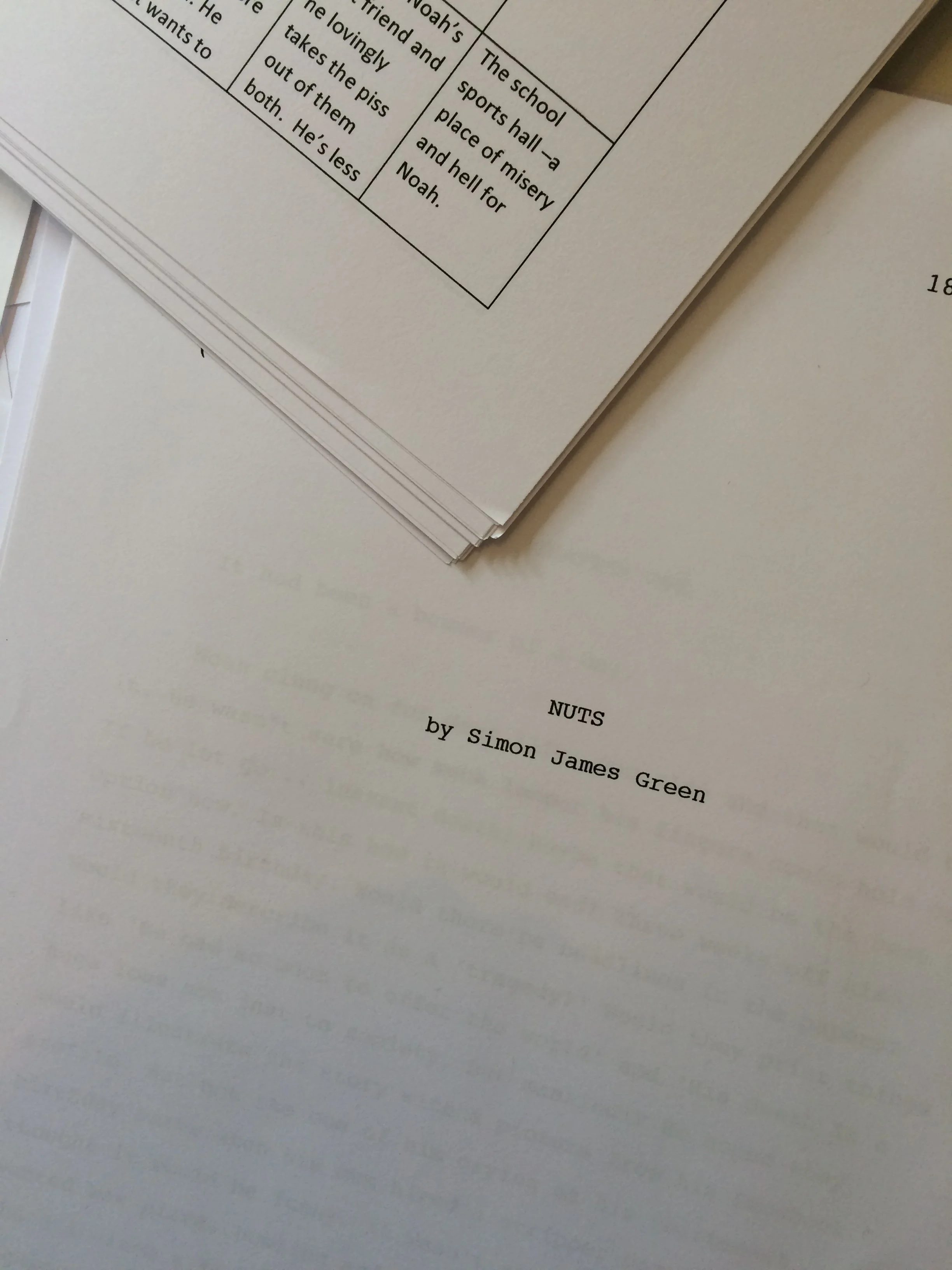
An early draft of Noah Can’t Even, when it was still called ‘Nuts’.
Over the course of five years (yes, really!) I received feedback from several freelance editors who read the whole manuscript and provided detailed notes. That came at a cost, obviously, but I still think it was one of the best things I did for my writing career. The clarity I got from having a fresh pair of eyes on the story was invaluable and those editors improved everything across structure, themes, characterisation and dialogue. Editorial feedback is not cheap and I acknowledge the cost means it isn’t accessible to everyone. It also might not be helpful for everyone. Plenty of people get published without using it. I had to save up to be able to do it (I’m not from a wealthy background and working in theatre doesn’t pay well!) but it was the best investment I made and I would be lying if I didn’t tell you I think it made the difference from me being rejected again to getting offers of representation.
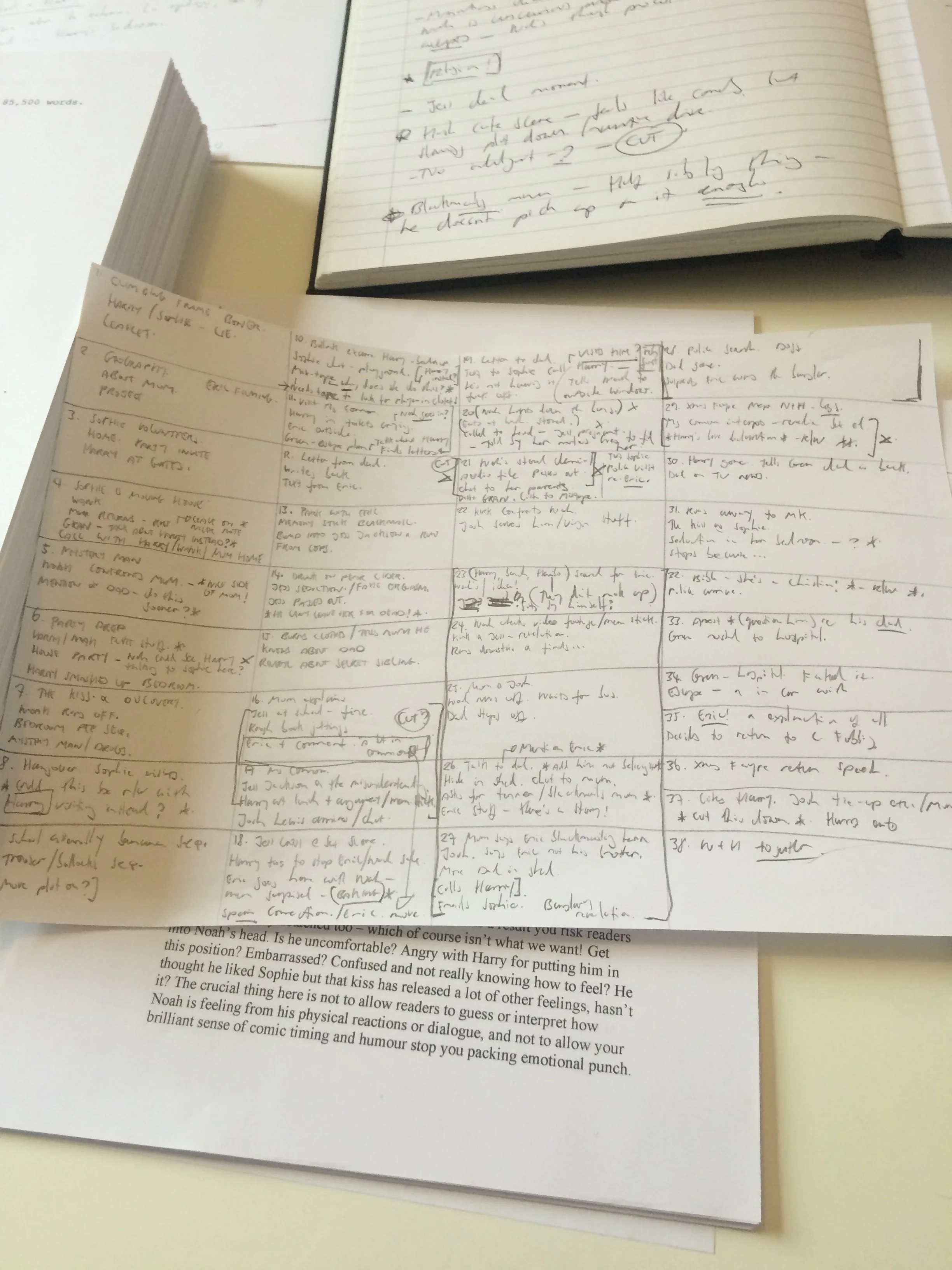
Some editorial feedback on a draft of Noah, along with my jottings for edits and a restructure. (No comments on my handwriting, please! I can read it, haha!)
I also joined the Golden Egg Academy which gave me additional editing tools, including more feedback from industry editors, as well as insight into what agents and publishers were looking for in the market. These days, there are a range of organisations like Golden Egg, all at different price points (including various free or very low-cost options – check out Write Mentor, for example), and all offering different levels of access to various industry experts and general support – including social events, which is actually a really nice way to meet other writers and share what you’re going through. I would recommend looking at all these services to see if anything suits you. Hearing (or having a one-to-one) with actual agents or editors from publishing houses, as well as published authors sharing their experiences, is so useful. We all think we’ve got a great story, and lots of us probably have, but are we presenting that in the best way for the market? Publishing is a business and while ‘the art’ is still important to a lot of people working in it, so is the need to make money, because that’s how everyone gets paid. The two must work hand-in-hand, and knowing which genres publishers are looking for, what audiences they want to hit, and what’s selling is all information you can use your advantage. Being an author is like being any other small business, and you wouldn’t open a business in any market that you hadn’t properly researched and understood – or, at least, you wouldn’t if you wanted to be successful.
When I’d worked on my manuscript to the point where I really didn’t think I could do any more, it was time to think about submitting it. If you want to be traditionally published (i.e. by a publishing house like Penguin, Simon & Schuster, Scholastic, etc. who will work with you editorially, and take charge of marketing, PR, sales, production and so on), then you’ll need a literary agent. Most agents are open to submissions at various points throughout the year and the details about how to do that, and what they’re looking for, are listed on agency websites. You’ll need to research who represents your genre and age group – i.e. some agents only rep children’s and YA, others only adult, some are looking for romcoms, others want literary. It’s competitive. Hugely. Most agents receive a ludicrous number of submissions but only have the bandwidth to take on one or two new clients. Being rejected isn’t necessarily an indication your writing is bad – just that it isn’t what they are personally looking for, which might be for any number of reasons.
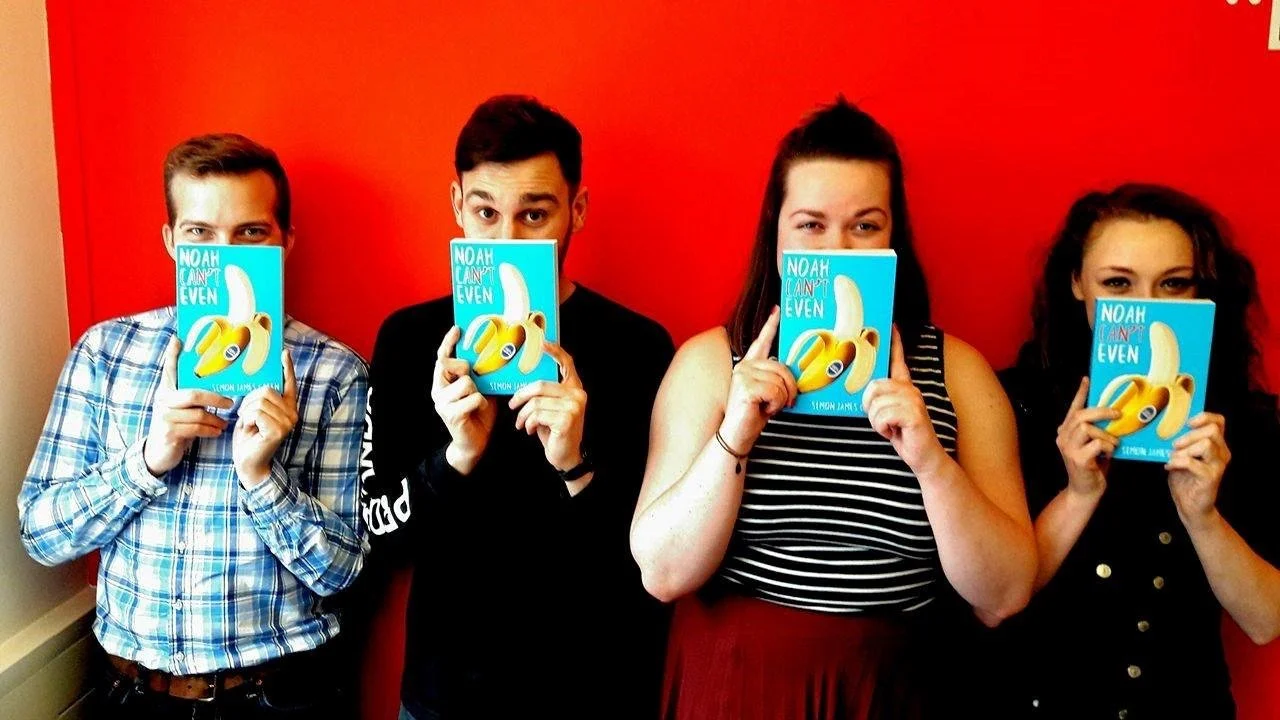
The brilliant team at Scholastic UK who helped launch Noah – Linas, editor; Liam, designer; Olivia, PR; and Ro, marketing.
I decided to go via the route of a writing competition to try and get noticed, so I entered one called Undiscovered Voices. I ended up being one of the winners and because of that, I was in the fortunate position of being approached by agents (rather than me approaching them) and I ended up with multiple offers of representation. So, I’m a big fan of writing competitions and it’s worth having a look at what’s around and whether that might be a good route for you. If you don’t, I would follow agents on social media, get a sense of what they like, take any opportunity to meet with them, and send your work to any who you feel would be a good fit.
After I signed with my agent, I got my first book deal a few months later. That, and my journey afterwards, is a story for another day. The summary for this first stage though:
Enjoy experimenting with your writing – it’s all valuable.
Get editorial feedback – professional, if you can afford it, but if you can’t, perhaps a fellow writer can help. Can you join a crit group? Be wary of feedback from friends or family who aren’t in the business – they are well meaning, but rarely able to provide the insight you need to take things to the next level.
Draft, re-draft and re-draft again. You think it’s ready – chances are, it isn’t.
Get informed about the industry – knowledge is power.
Consider a writing competition – it might just give you the edge to get spotted in a crowded marketplace.
Despite perceptions sometimes, most authors spend years slogging away, being rejected, failing, and trying again. It’s a marathon, not a sprint, and that continues after your first book deal. Try not to get despondent – it’s hard, frequently unfair, and no one would deny that.
Of course, many people choose the self-publishing route, taking charge of all aspects of their book from editorial through to PR and marketing, and being very successful in the process. I’m not an expert on that, but it’s also an avenue worth thinking about and I believe can work particularly well for genre fiction like adult romance and crime.
I hope that’s helpful. If you have questions, whack them in the comments below, and I’ll do my best to answer. Happy writing, joyful editing, and good luck!